

Death is getting new life
A taboo topic
Today’s newsletter deals with the uncomfortable topic of death so I completely understand if you want to skip this one. With that being said, I’d encourage you to give it a read so we can destigmatize the topic together.
🐝 Michelle
Death is getting new life
Today we’re going to talk about a topic that no one likes to talk about: Death. As far as “trends” are concerned, this is the one that 100% of us will experience and majority of us ignore in today’s society, until it’s right in our face.
I’m not sure if you’ve had anyone die who is close to you but there will be a time that it comes. My dad passed away a year ago and I’m finally seeing a bit through the fog of grief to the light on the other side. I’m sorry for everyone who has dealt with the loss of a loved one. Death is shocking, it’s heart breaking, and unfortunately it’s inevitable.
Something I realized through this experience is that society as a whole essentially avoids the topic of death as best as possible. Of course it becomes more a part of every day life the older you get, but I was unpleasantly surprised at this realization.
So it got me thinking, why don’t we like talking about death as a society?
Obviously death is a HARD topic to stomach, but it is a natural part of life. One of my favorite books I read about death was by Tim Keller called On Death. He talks about one of the main reasons for this is because we are not surrounded by death like people were a century ago:
Medical advancements have extended our average life expectancy from 39 years old in 1800 to 80 years old in 2020. Back then people died from all sorts of things that we don’t die from anymore.
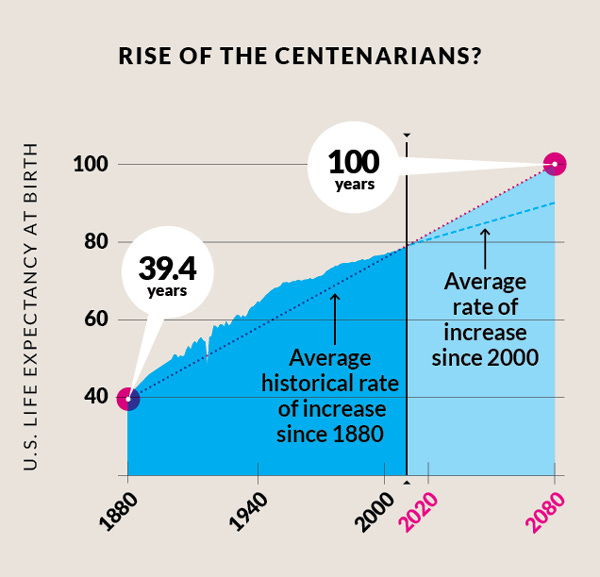
People often died at home back then as well, which means people were physically surrounded by death more. Did you know that’s where the term Funeral Parlor came from? The body would be displayed in the parlor of the house for a few days for the viewing.
It’s a self-fulfilling prophecy. Because we’re not around death as much, we don’t talk about it as much, which means we aren’t equipped to talk about it when it does happen, which has made it more of a taboo topic, which means we avoid it even more.
Our society has become much more individualistic, which means people are mourning alone vs. in their communities. This makes people feel like they can’t talk about it and sometimes they don’t have anyone to talk to about it with at all.
Because it’s extremely emotional and difficult to deal with. From a Millennial reader in Raleigh who has dealt with a lot of death at an early age: “I think we avoid the topic of death with close friends or loved ones because it’s uncomfortable; either we don’t know what to say to comfort others, know we can’t “fix” it because of its permanence, feel scared about our own death, or aren’t well practiced in sitting with someone in their grief. In the instance when it’s someone we have lost, we shrink our grief to maintain the status quo. Or we don’t know how to talk about the loss because sometimes it’s so profound it’s hard to put into words.”
Our culture is seeking any method possible to postpone death. Bryan Johnson, the man who wants to live forever, is the extreme example, but just the anti-aging industry alone was worth $200B in 2021 and is projected to grow to $422B in 2030.
I spoke with my friend Justin who is a funeral director and embalmer. As you can imagine, this is an incredibly hard profession. Justin is one of the kindest, most empathetic people I know. I got his thoughts on the topic:
“Death has been sterilized in America. As modern medicine has advanced to our benefit, death has become viewed more in a medical sense than a communal or spiritual sense.
The best illustration I can think of when it comes to our society’s distance or uncomfortableness with death is the sight of a hearse. In rural communities, especially in the south, it was common practice for the funeral home to respond to a death that had occurred by driving a hearse to collect the body. Not just using a hearse on the funeral carrying the casket, but to come to the home or hospital and collect the body in a hearse. Friends and neighbors start gathering to support the family because they saw the hearse in the driveway.
Contrast that to our urban families in Raleigh, we started driving minivans to homes and hospitals to conceal the death. Urban or more modern communities are shocked to see a hearse and have an obvious discomfort at the site of a vehicle designed to transport their most precious possession (a loved one’s body).”
What trends are happening in the death space?
People are opting for other methods besides traditional burial - In 2023, Cremation accounted for 60% of the way bodies are disposed in America. A lot of this has to do with how expensive burials are, and also because our culture is becoming more secular. Additional, newer methods are coming onto the scene due to regulatory changes like aquamation (water cremation), green burials (no embalming and in a biodegradable container), and composting.
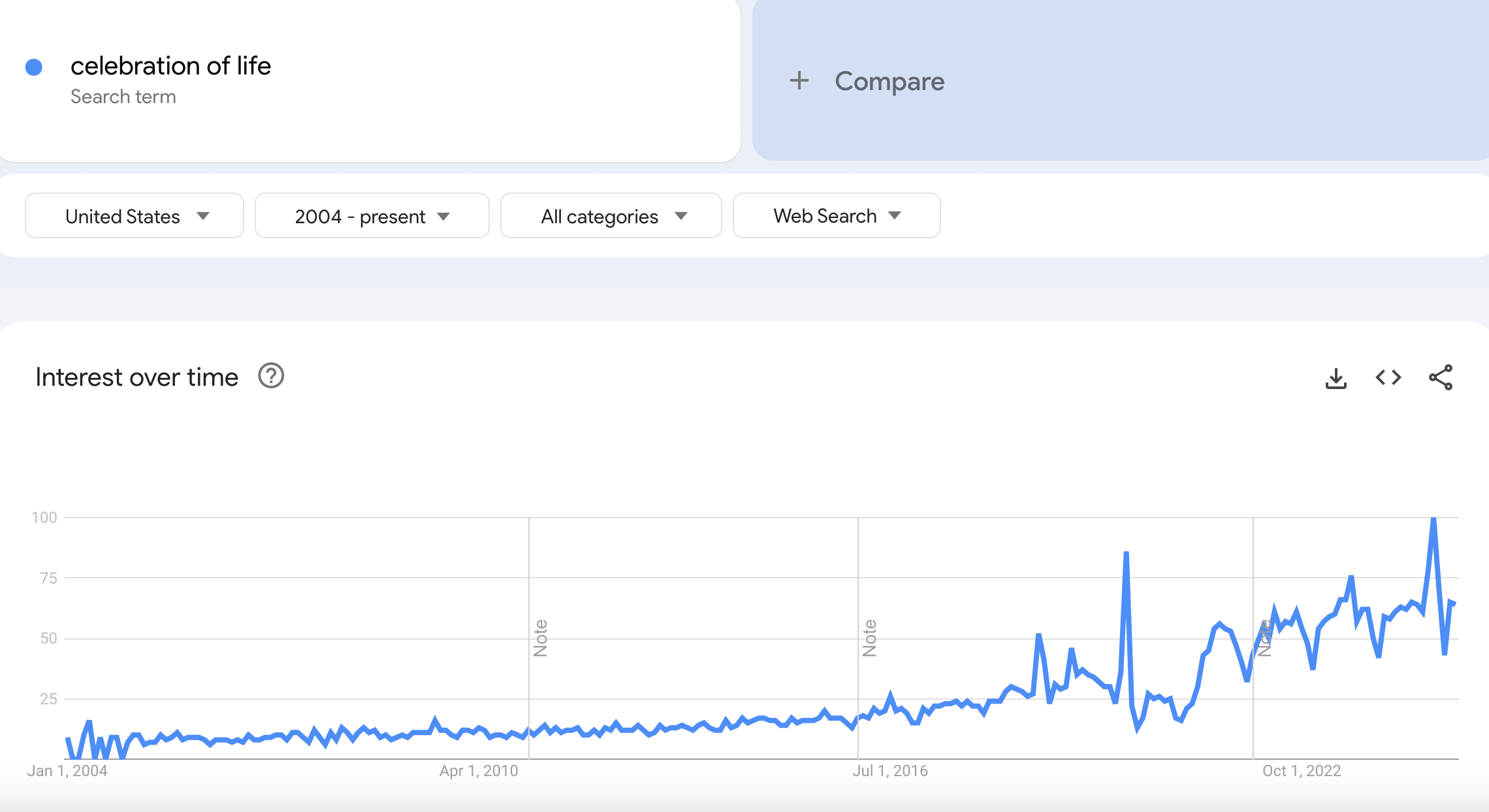
Funerals —> Celebrations of Life - People are throwing events that feel more like a party than a funeral. For example, people are booking bars or Airbnbs to throw an event that reflects the life and passions of the person who passed away. As you can see from this Google Trends chart, “Celebration of Life” search interest has increased ~4x in the past 11 years.
There are early signs that the conversation around death is starting to shift and people are becoming more open to it. For example:
The Death Positive Movement - started by the mortician and writer, Caitlin Dougherty. The goal of this movement is “about making death a part of your life. That means committing to staring down your death fears—whether it be your own death, the death of those you love, the pain of dying, the afterlife (or lack thereof), grief, corpses, bodily decomposition, or all of the above. Accepting that death itself is natural, but the death anxiety and terror of modern culture are not. People who are death positive believe that it is not morbid or taboo to speak openly about death. They see honest conversations about death & dying as the cornerstone of a healthy society.”
Death Cafes - different from grief or end of life support groups, death cafes are groups that meet a coffee shops to facilitate conversations about death.
Social media communities forming like #deathtok on TikTok and the Subreddit, r/deathpositive, which has 20k people in the group.
Startups in the deathtech space are cropping up - A friend and old coworker from my Wieden + Kennedy days, Daniel Shaw, started Autumn, an end-of-life marketplace that connects bereaved communities with local providers to help manage life after loss.
We talked about how from a logistical standpoint, death is a distributed group project that is a very complicated legal and financial exercise. And most people are NOT equipped to deal with it. This is where Autumn comes in. It has guides and checklists for what you need to do when and connects you with local, trusted resources. (This is your reminder to get your your last Will and Testament and Advance Care Planning documents done. It’s one of the biggest gifts you can give your loved ones.)

From a marketing standpoint, I asked Daniel how he thought about developing a brand related to death. He shared that “Many brands in this space have been misguided, using ornate language, cheesy logos, and making assumptions about the emotional state of the customer (many people are sad, but some people are really angry or relieved).
A brand in this category needs to be functionally empathetic. You don’t need to include a lot of flowery language about how sorry you are. You need to get to the point and provide a straightforward service, especially when people are grieving as it is a temporary disability in the technical sense. You have trouble organizing yourself, can’t think clearly, and your life is disrupted. That doesn’t mean you don’t have to be un-empathetic, but consider the state of mind your consumer is in and make it easy for them to find what they need.
Autumn is purposefully not overtly of the category. It has an elevated sense. People get together in autumn to break bread and be together and it’s a time of transition. It’s not winter, but it’s also not spring. Long term, Autumn won’t just be a marketplace, but a modern deathcare brand. It will be on a casket and funeral home in the future.”
Death is quite a wake up call and an opportunity to live a fuller life. Here are a few things I’ve found helpful:
Make a Deathbed Regret list. I was introduced to this concept a few years ago and I thought it was really interesting. Essentially, ask yourself what would you regret not having done when you’re on your deathbed, and reorient your life around these things. Another similar exercise is to think about what your Eulogy would say right now and what you’d want it to say, and work on the gaps between the two.
Keep a gratitude journal. Even when you’re deep in the midst of grief, there are beautiful moments that happen throughout the day that are reminders of the wonderful things in this world. Writing them down helps to ground you and remind you of the beauty amidst your pain. I do this on my notes app every day before I go to bed or in the morning right after I wake up.
Show up for your friends or family members who are grieving. This is a great post about ways to show up from Kate Bowler:
The TLDR? Death is getting a second life. Younger generations are creating conversations and spaces to openly discuss this topic, and people are opting for alternatives from traditional burials and funerals.
➡️ Advice for marketers in the deathcare industry: Daniel’s take was quite refreshing. There are a lot of antiquated brands in this space that could use a refresh or “brand resurrection” if you will. 😂 There are some pages you can take from the books of baby formula and period brands who are not shying away from using images of milk-filled breasts or period blood to help reduce the stigma and normalize the conversation around these topics.
➡️ Advice for marketers dealing with the topics of death (e.g. LegalZooms or RocketLawyers of the world where you can get your Will done): There are some interesting ways you can align with people thinking about this topic (e.g. sponsor a Death Cafe meetup).
➡️ Advice for marketers who aren’t related at all to death: Likely, there’s not a ton of tactics that would make sense. Looking like you’re trying to monetizing grief or death could be the nail in your brand’s coffin. With that being said, there is a chance that from a mindset or lifestage standpoint your audience is dealing with death, so consider how your brand can empathetically and authentically show up. Not talking about it AT ALL might not be the right approach.
Dinner Party Fodder
This section is a grab bag of fun links that will give you tasty tidbits to talk about at your next dinner party or when you’re catching up with a coworker.
💯 Follow of the week - Kate Bowler often talks about how life is hard, humans are imperfect, and grief sucks. She’s a Duke divinity professor and NYT best seller for many of her books.
🙏🏻 Verses of the week - Psalm 23 and Isaiah 43 both really comforted me after my dad passed away. Hopefully it comforts you too. 💗
📖 Book of the week - On Death by Tim Keller.
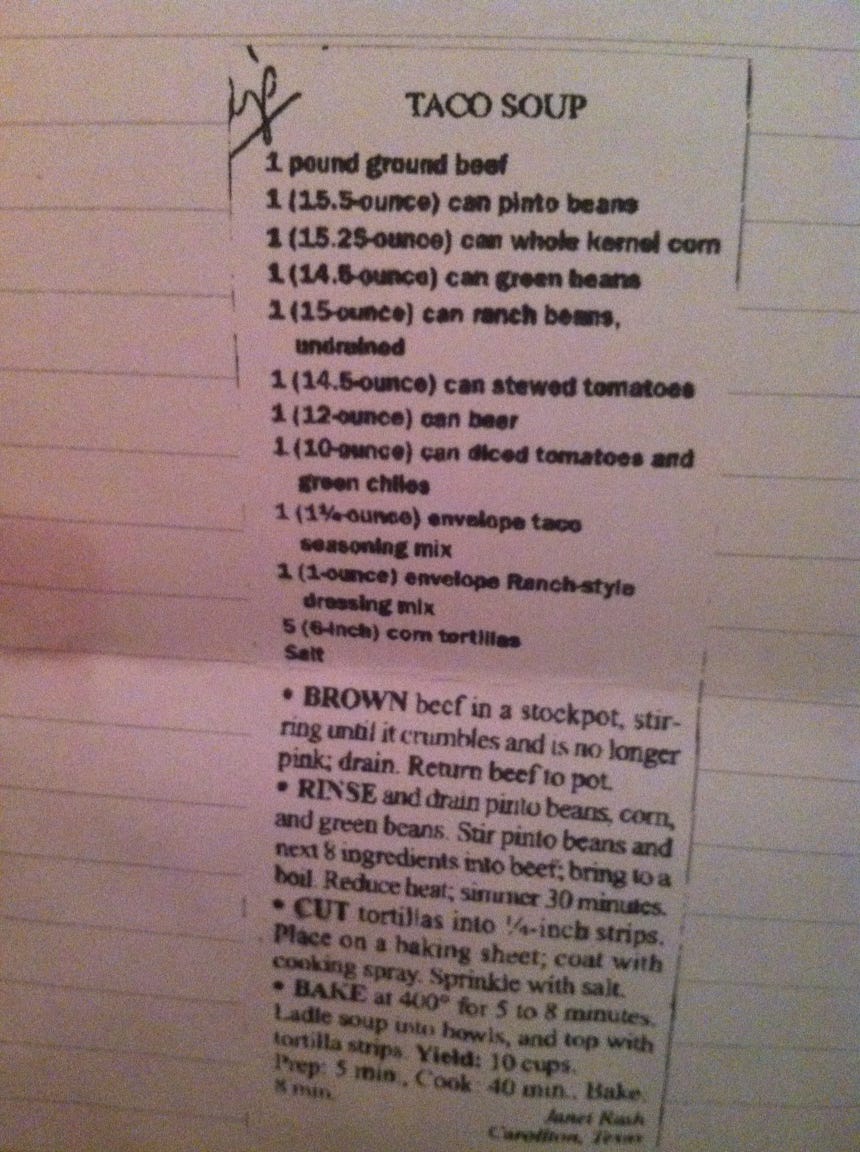
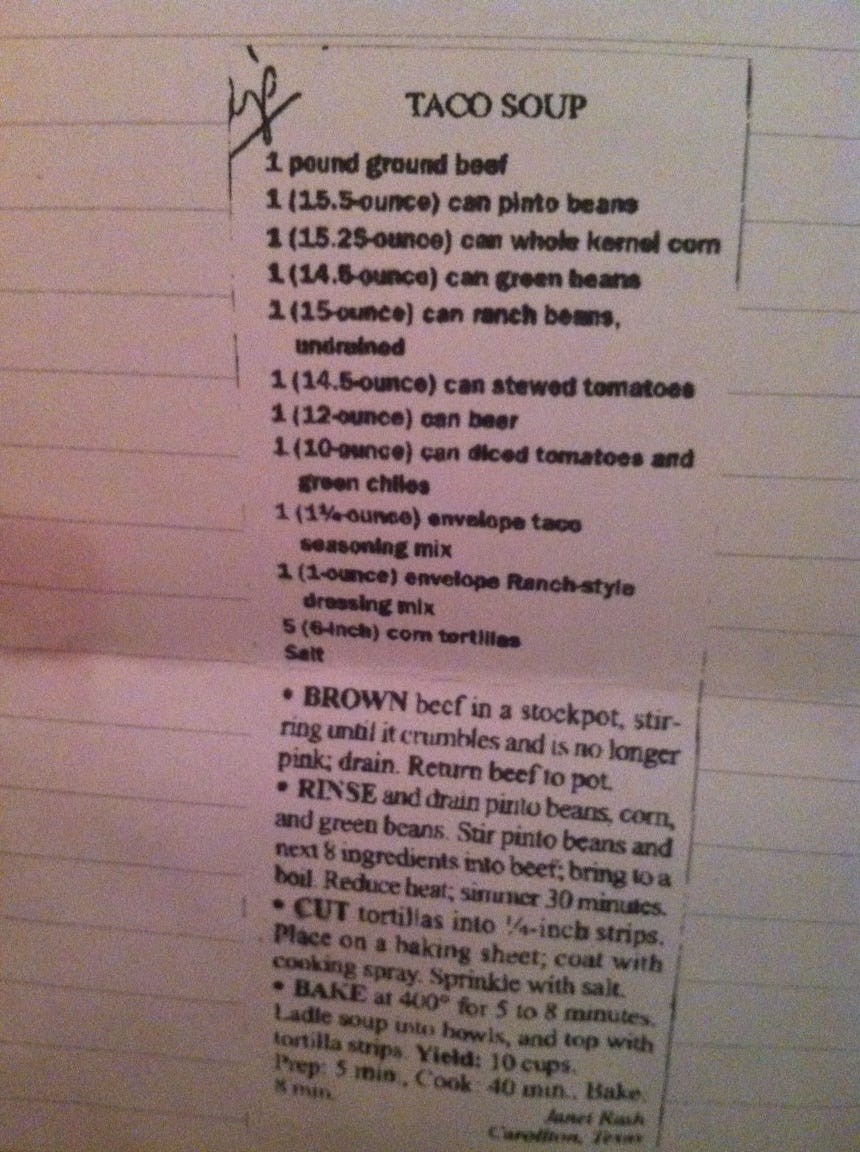
🌮 Recipe of the week - We’ve had a snowy week in Raleigh so the soup recipes continue. This one is a family fav we call “taco soup”. Add tortilla chips, cheese, and diced white onion to top it all off!
😮MG of the week - this sweet angler fish swimming to the surface of the ocean only to die moments later AND ALSO being WAY SMALLER than anyone ever imagined.
🥞 Mashup of the week - someone’s dreams are coming true with the IHOP Applebee’s mashup that just opened in Texas. Apparently the stores are doing 1.5-2x revenue than a single brand does in the same size store in Mexico. TBH, might be a bangin brunch spot.
▶️ Video of the week - I haven’t watched this yet but it is an almost 2 hr interview with Mr. Beast and it looks fascinating.
📝 Launch of the week - Interestingly, Instagram influencer Julia Berolzheimer of Gal Meets Glam just launched a Substack newsletter called Trade Offs with her husband Thomas. It’s another way to diversify her footprint and also monetize her following.
❓Question of the week - If you enjoy reading The Pollinatr, would you take 1 minute to email or text a few of your friends the link? Thanks in advance!
Have a great week,
Michelle